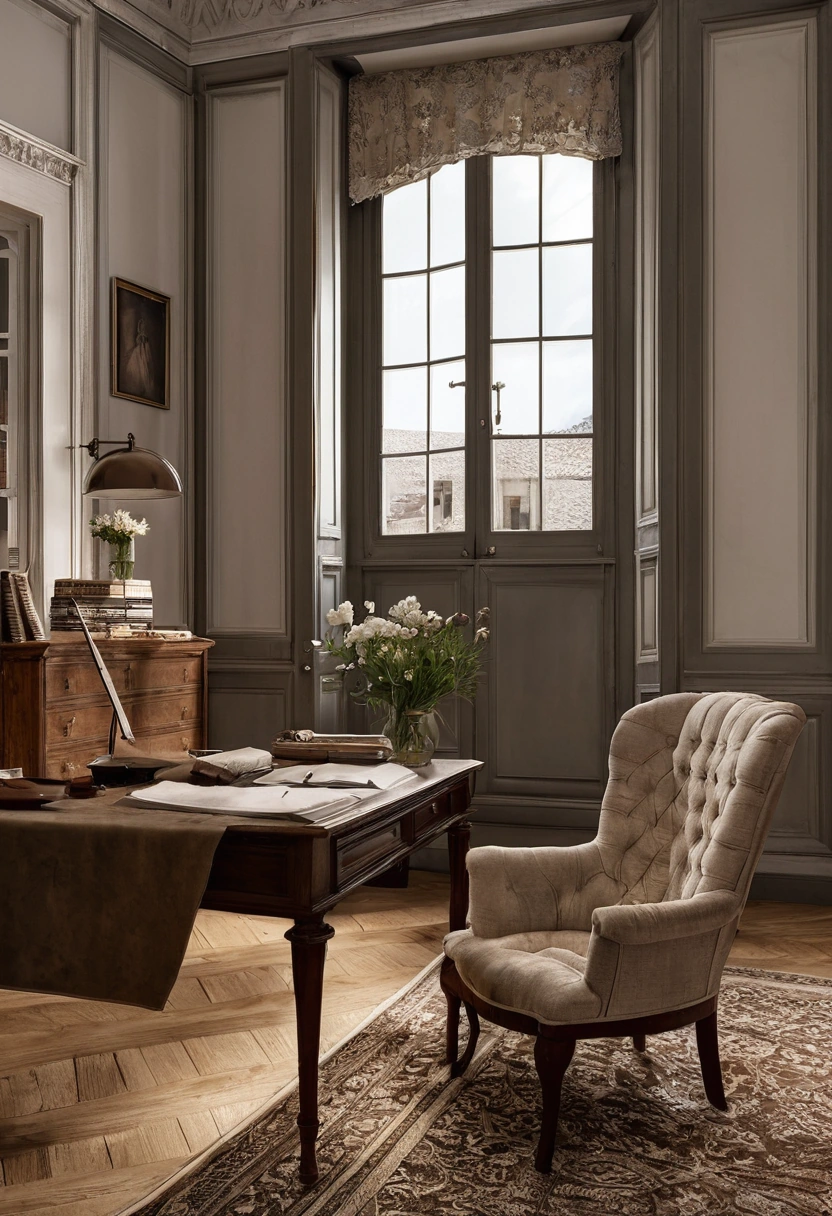
Read a Historic Home Office Through Its Objects and Their Work
A desk, chair, shelf, and lamp can make a historic home office feel immediately familiar. Yet the objects do not explain themselves. Modenese Furniture offers contemporary furniture inspired by classic forms; studying a preserved office calls for a different question: what evidence connects each object to the work, people, and period that a museum interprets? Shape alone cannot establish provenance or use.
For visitors interested in a historic house museum, a study is especially tempting to read as a portrait of one person. A desk can suggest writing, a bookcase learning, and a comfortable chair private reflection. Those are possible interpretations, not facts about a particular room. A careful visitor or curator separates the object that survives, the object that is period appropriate, and the reproduction installed to explain a function.
First identify what kind of object you are seeing
A museum room may contain original objects that were used at the site, period objects from elsewhere, and reproductions. Each plays a different role. The National Park Service Museum Handbook lists those categories and calls for furnishing historic interiors with strong evidence and limited conjecture. A plausible desk is not thereby the desk that a named resident owned.
Read labels, catalogs, and room plans before drawing conclusions. A label may identify a table as original to the house, a similar example, or a replacement made for interpretation. If the status is not shown, ask. The answer changes the story that can be told: a documented original may bear traces of use, while a reproduction can demonstrate scale or placement without claiming to be a survivor.
Even an original object can move. A desk may be associated with the resident but displayed in a different room from the one in which it stood. Photographs can show a later arrangement; inventories can list possessions without locating them precisely. A responsible account gives the date and nature of the evidence, rather than presenting every object as a frozen scene.
Ask what the desk made possible
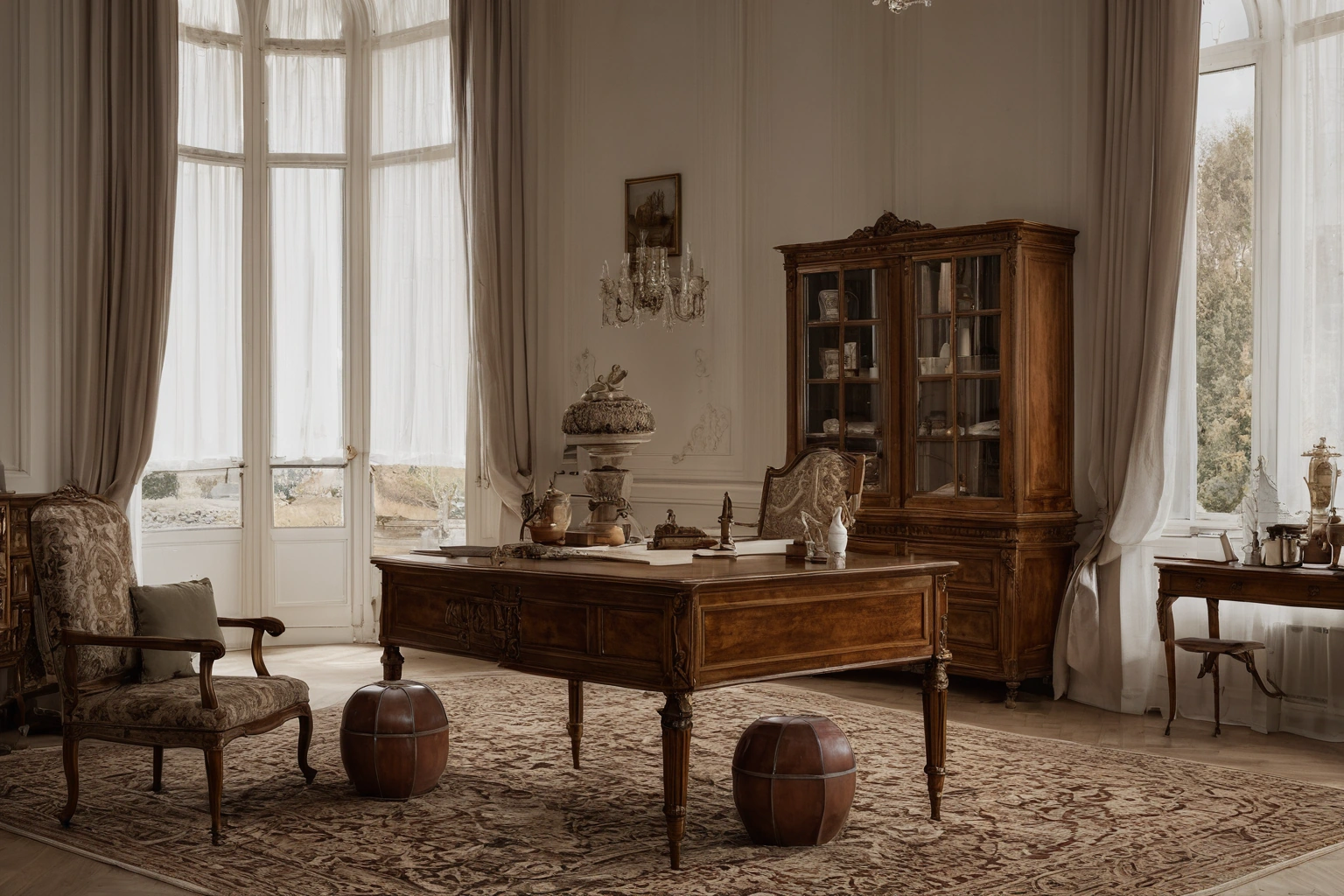
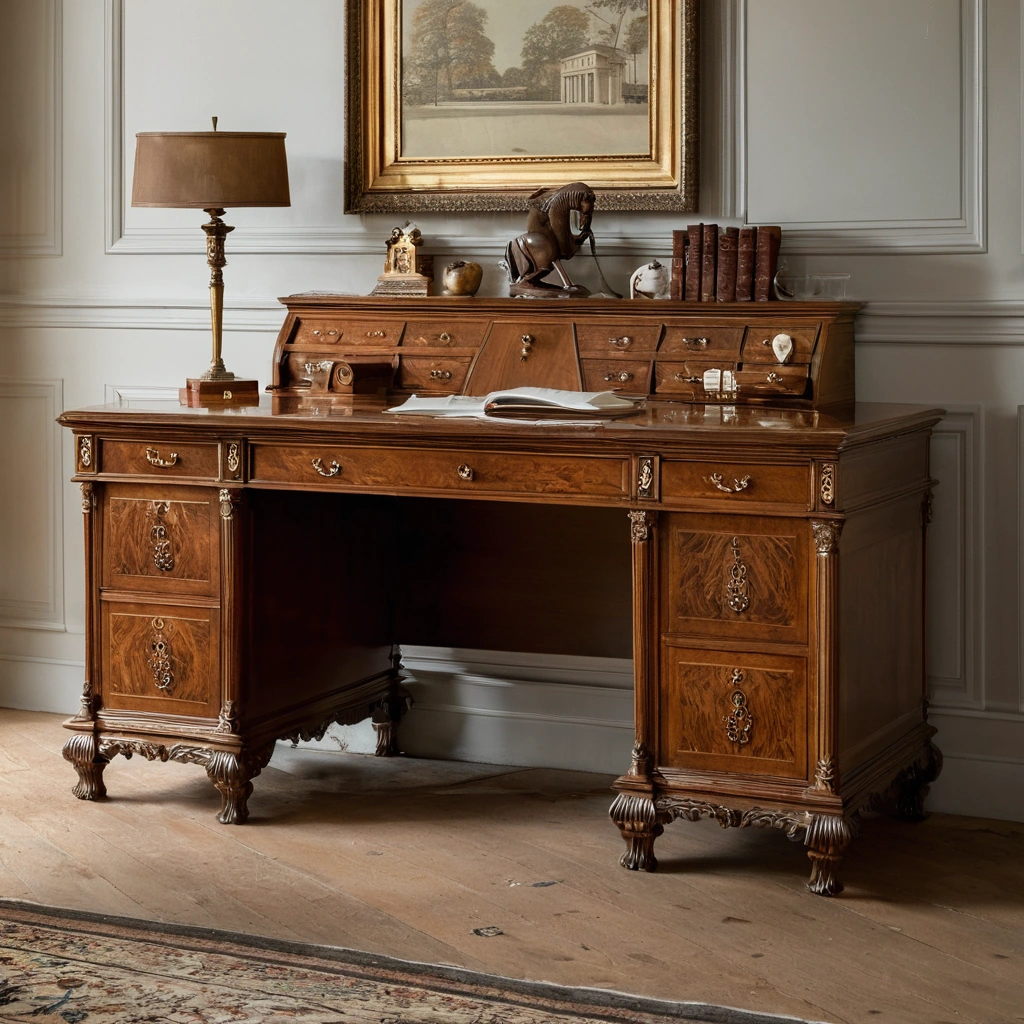
A desk is a work surface, but its form can narrow the question. Does it offer a broad top for papers? Drawers for records? A slope for handwriting? Enough space for a visitor to sit opposite? Those features suggest possible activities. They do not prove who sat there or what was written. Match the furniture to letters, account books, diaries, photographs, and room descriptions before making a specific claim.
The National Park Service account of Franklin D. Roosevelt's library study provides a useful contrast because it names the room's functions and distinguishes a copied desk from the original that was removed. It says Roosevelt selected the room's furniture and objects for his own use, but the desk now displayed is a copy. That precise distinction lets a visitor understand the room without assuming that every visible object is untouched.
Use that example as a method, not as a template for another museum. Ask what documents connect a local study to business, correspondence, reading, family administration, or political work. A desk might have supported several activities over decades. Furniture moved, households changed, and spaces gained new purposes. The interpretation should identify the period being shown.
A chair adds another layer. A chair at the desk suggests seated work, but its height, arms, upholstery, and position matter. Was it made for the desk or placed nearby for a visitor? Is wear consistent with use, and has that wear been documented by a conservator? Avoid treating a worn surface as direct evidence of a named person's habits without records.
| Object | Possible function | Evidence to seek |
|---|---|---|
| Desk | Writing or accounts | Inventory, room image, correspondence |
| Chair | Work or receiving a visitor | Placement record, object history |
| Bookcase | Storage and display | Book ownership, catalog, shelf marks |
| Writing set | Paperwork | Provenance and period documentation |
| Lighting | Reading or work after daylight | Fixture history and room records |
Books and small objects need their own provenance
A shelf of books can create a strong impression of an intellectual life. It may include a resident's own books, donated volumes, or volumes chosen to suggest a period. The titles can matter, but only when their ownership and dating are established. A modern shelf arrangement may also reflect conservation needs rather than the original order.
Small objects such as paperweights, inkstands, maps, photographs, and boxes bring a desk to life. They are also easy to relocate and easy to overinterpret. Ask whether each is connected to the household, to the period, or to a general activity. A map displayed beside a desk may show a historical concern without proving the resident consulted that particular sheet in that room.
The NPS Handbook recommends researching tax and census records, property records, inventories, diaries, work logs, biographies, and photographs when furnishing a historic interior. Those sources can turn a decorative arrangement into an argued interpretation. They can also reveal people whose work kept the household running but whose objects are less likely to have been preserved.
Read the office as a working room, not a still life
Think about how someone entered and used the room. Could a visitor reach a chair without crossing the owner's work surface? Was daylight available at the desk? Did shelves require a ladder or step? Were records stored where they could be reached? A plan that answers such questions makes furniture placement meaningful. But modern visitor barriers, electrical services, and conservation controls may change the route today.
The room might have been private for some people and a workplace for others. Who cleaned it, brought fuel or light, filed papers, or carried messages? An interpretation centered only on the desk's owner can erase those activities. The NPS's Haberdeventure article shows how ordinary furnishing choices can help tell the stories of people whose labor is less visible in the grand rooms of a historic house. It also warns by example that material differences belong to a particular site and social setting, not every home office.
Examine the view from the doorway as well as the view from the desk. A display may position the chair to help visitors see the room, although the documented placement was different. A conservation barrier may protect a surface but obscure how the desk worked. These are reasonable museum choices; they should be explained where they affect interpretation.
Handle uncertainty explicitly
Historic interiors rarely come with complete photographs and inventories for every year. A curator might know that the resident owned a desk but not its precise position, or know the room function but lack its original furnishings. The honest phrase is "likely" or "based on" with a cited reason. An attractive reconstruction gains credibility when its limits are visible.
A useful room record can separate three columns: documented facts, supported inferences, and open questions. For a visitor, this distinction invites closer looking. For an institution, it keeps later discoveries from becoming awkward corrections. If a new photograph changes the interpretation, the room plan can be revised while retaining the trail of decisions.
Conservation also shapes what is displayed. Light, handling, and environmental change can damage original objects, so a reproduction may stand in for a fragile piece. A reproduction can explain scale and activity honestly when it is identified as such. Do not ask a museum to place a vulnerable original in a position simply to make a room look more complete.
What can a present-day reader learn from the study?
A historic office teaches that furniture is a record of decisions about work: where papers went, who could enter, how light was used, and which objects were displayed. It also demonstrates the limits of visual resemblance. A new desk made in a historical style can suit a present-day home, but it cannot inherit the biography of a museum object merely by sharing a silhouette.
When visiting a historic house, choose one object and follow its evidence. What is its date? Who owned it? How was it placed? What activity does the museum say it supports, and what record backs that explanation? Then look at the whole route through the room. The most rewarding question is not whether the office looks old, but what its objects can responsibly tell us about the people who used it.